

Advancing the science and practice of mechanical engineering is the responsibility of the Society's 37 Technical Divisions and Subdivisions, which span a vast array of disciplines, technologies and industries:
- Advanced Energy Systems - Promotes the advancement of emerging energy conversion devices and processes, such as hydrogen technologies, fuel cells and heat pumps, and understanding of thermo economics.
- Aerospace - Concerns mechanical engineering of aircraft and manned/unmanned spacecraft design, including adaptive structures and materials, propulsion systems and life support equipment.
- Applied Mechanics - Advances the study of how media, including solids, fluids and systems, respond to external stimuli, as well as the specialized areas of shock and vibration and computer applications.
- Bioengineering - Focused on the application of mechanical engineering principles to the conception, design, development, analysis and operation of biomechanical systems.
- Computers & Information in Engineering - Concerned with the application of emerging computer simulation technology to enhance the entire engineering process.
- Design Engineering - Addresses the design concepts of machines and mechanisms, such as fastening/joining methods and gearing, as well as design aspects affecting reliability and manufacturability.
- Dynamic Systems & Control - Concentrates on control methods and devices, from servomechanisms and regulators to automatic controls, for dynamic systems involving forces, motion and/or the flow of energy or material.
- Electronic & Photonic Packaging - Fosters cooperation on mechanical engineering considerations of microelectronics, photonics, microwave and microelectromechanical systems design and manufacturing.
- Environmental Engineering - Concerns air, ground and water pollution control technologies, including environmental remediation and mixed hazardous/radioactive waste management.
- Fluids Engineering - Involved in fluid mechanics in all types of systems and processes involving fluid flow, including pumps, turbines, compressors, pipelines, biological fluid elements and hydraulic structures.
- Fluid Power Systems & Technology - Advances the design and analysis of fluid power components, such as hydraulic and pneumatic actuators, pumps, motors and modulating components, in various systems and applications.
- Fuels & Combustion Technologies - Dedicated to the understanding of fuels and combustion systems in modern utility and industrial power plants, including fuels handling, preparation, processing and by-product emissions controls.
- Heat Transfer - Enhances the theory and application of heat transfer in equipment and thermodynamic processes in all fields of mechanical engineering and related technologies.
- Information Storage & Processing Systems - Focuses on the mechanics of electronic information storage devices and their manufacture, with primary focus on rigid and floppy disks, magnetic tape, VCR and optical disk technologies.
- Internal Combustion Engine - Furthers mechanical engineering of all types of reciprocating combustion engines, including diesel and spark ignited engines for...






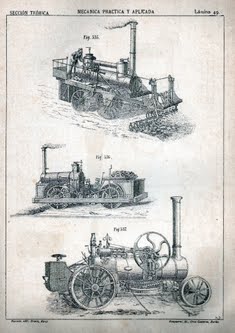 Mechanics (Greek Μηχανική) is the branch of science concerned with the behavior of physical bodies when subjected to forces or displacements, and the subsequent effects of the bodies on their environment. The discipline has its roots in several ancient civilizations...


